The Ethical AI Handbook: Write a Standout Personal Statement for 2026
Pupil Abroad
2025-12-15
5min 4sec
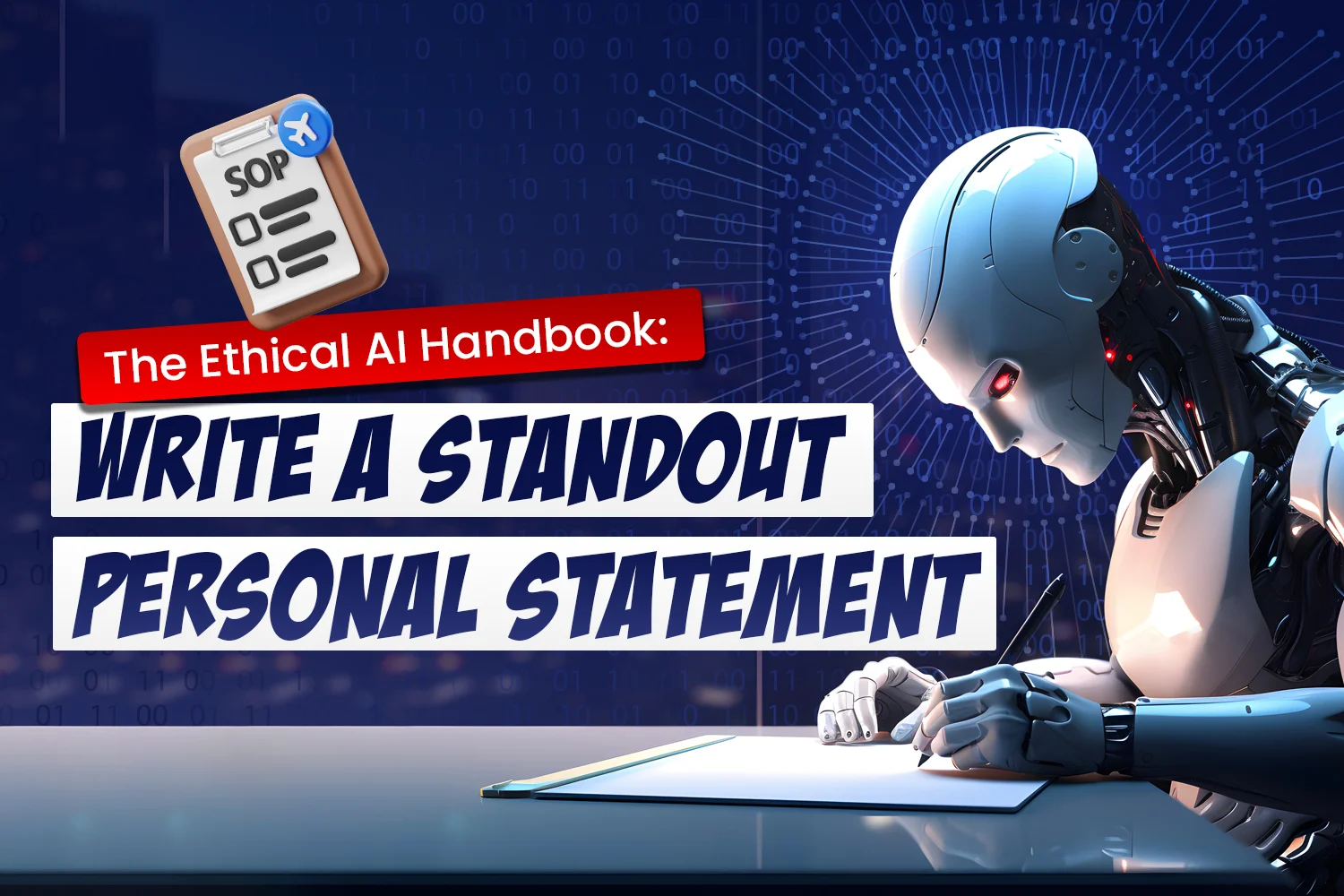
Navigating the New Frontier of AI-Assisted Admissions
The college application process has entered its most significant transformation in decades. As we approach 2026, generative AI tools like ChatGPT, Claude, and Gemini are reshaping how students approach one of education's most daunting challenges: crafting compelling personal statements and application materials. This isn't about replacing human creativity—it's about augmenting it. The students who will thrive in the 2026 admissions cycle will be those who master the art of ethical AI collaboration.
The New Reality: AI as Your Brainstorming Partner
Gone are the days of staring at a blank page, paralyzed by the pressure to be "unique." Today's savvy applicants begin their journey by engaging AI in what I call "idea mining." This initial phase involves treating AI as a creative sparring partner rather than a ghostwriter.
Try this approach: Instead of asking "Write my personal statement about immigrating to Canada," prompt: "Generate 20 unique angles for a personal statement about cultural adaptation. Focus on unexpected moments of learning rather than obvious challenges." The difference is profound. The first request produces generic, detectable content. The second generates creative springboards that preserve your authentic voice while overcoming writer's block.
Admissions officers I've interviewed confirm this distinction matters. "We can immediately spot the AI-generated essay from the AI-enhanced essay," says Maria Chen, Director of International Admissions at a top U.K. university. "The former lacks specificity and emotional resonance. The latter uses AI to uncover deeper stories but maintains the student's authentic narrative voice."
The Ethical Framework: Transparency Over Secrecy
The emerging consensus among admissions committees for 2026 is shifting toward transparency rather than prohibition. Several universities are already updating their application guidelines to include statements like: "If you used AI tools in your preparation process, briefly describe how in your supplementary materials."
Here's what ethical AI use looks like in practice:
- Idea Generation: Using AI to overcome initial blocks and explore themes
- Outline Development: Creating structural frameworks for complex essays
- Language Polishing: Refining clarity without altering voice
- Counterargument Exploration: Testing thesis strength through simulated critiques
What crosses the ethical line:
- Full Essay Generation: Submitting content created entirely by AI
- Fabricating Experiences: Using AI to invent extracurricular activities or achievements
- Voice Mimicry: Training AI to write in "your style" to bypass detection
The most forward-thinking applicants are creating what I call an "AI Process Appendix"—a brief, honest note explaining their ethical use of tools. This demonstrates both technological literacy and academic integrity.
The Human Edge: What AI Can't Replicate
As AI becomes ubiquitous, the very nature of what makes an application compelling is evolving. Admissions officers in 2026 will be searching for what I term "irreducible humanity"—those elements that cannot be algorithmically generated.
Focus your energy on cultivating these authentic differentiators:
- Specificity of Detail: AI struggles with precise, sensory details. The smell of your grandmother's kitchen, the texture of the soil in your community garden, the exact dialogue from a transformative conversation—these grounded particulars mark authentic human experience.
- Emotional Honesty: While AI can describe emotions, it cannot replicate the vulnerability of sharing a genuine failure, the complexity of mixed feelings, or the subtlety of personal growth. Your willingness to be genuinely human in your reflections becomes your competitive advantage.
- Intellectual Curiosity: Showcase how you've pursued knowledge beyond assignments. That obscure philosophy book you discovered, the independent coding project you built, the research question you pursued out of pure interest—these demonstrate authentic intellectual engagement.
- Community Impact: Document your real-world interactions. How did you navigate disagreements in your debate team? What did you learn from mentoring a younger student? These relational insights reveal character in ways AI cannot simulate.
The 2026 Application Strategy: AI-Human Collaboration
Phase 1: The AI-Augmented Brainstorm (Weeks 1-2)
- Use AI to generate 50+ potential essay topics from your experiences
- Cluster similar ideas and identify unexpected connections
- Create "memory prompts" to jog specific details ("Describe the afternoon you learned to bake bread with your grandfather")
Phase 2: The Human-Crafted Draft (Weeks 3-5)
- Write completely without AI assistance
- Focus on raw emotional truth rather than polished prose
- Record yourself telling the story aloud to capture natural voice
Phase 3: The Strategic Revision (Weeks 6-8)
- Use AI for structural feedback ("Identify the weakest paragraph in this essay")
- Employ grammar tools for clarity, not voice alteration
- Have human readers (teachers, mentors) review for authenticity
Phase 4: The Integrity Check (Final Week)
- Run your essay through AI detectors not to cheat, but to ensure your voice shines through
- Add your "AI Process Statement" if appropriate
- Verify every detail reflects your genuine experience
The Future Is Collaborative
The most successful applicants of 2026 won't be those who avoid AI or those who depend on it entirely. They will be the students who understand this technology as what it truly is: a powerful tool for amplifying human creativity, not replacing it. They will approach their applications with a new kind of literacy—one that balances technological capability with emotional intelligence, algorithmic assistance with authentic self-reflection.
As you begin your 2026 applications, remember this: AI can help you find your story, but only you can live it. AI can help you structure your thoughts, but only you can feel them. The universities of tomorrow aren't looking for perfectly polished AI creations; they're searching for wonderfully human individuals who know how to think alongside machines while retaining everything that makes them uniquely themselves.
The boundary between human and machine creativity isn't disappearing—it's becoming the very space where the most compelling applications will be born. Your challenge isn't to outsmart the AI; it's to out-human it. And in that challenge lies your greatest opportunity.
Conclusion: Your Story, Amplified
The most compelling applications in 2026 won't be written by AI or by students alone, but through a new kind of collaboration. Your ultimate advantage isn't in outsmarting the technology, but in out-humaning it—leveraging AI to brainstorm and structure, while infusing the work with the specific details, emotional honesty, and intellectual curiosity that only you possess. Universities are not seeking perfectly polished AI artifacts; they are searching for authentic individuals who can think creatively alongside new tools while retaining their unique voice and vision.
Move forward with this principle: let AI be your compass for navigation, but let your lived experience remain the destination. If navigating this new landscape feels overwhelming, our team is here to help. Book a free application strategy session with a PupilAbroad advisor to create your personalized plan, or explore our AI Application Audit service for a detailed review of your drafts. Your authentic story, strategically amplified, is what will make your application unforgettable.