Student Visa Guide: Types, Requirements & Process for 2026
Pupil Abroad
2026-02-10
4 min
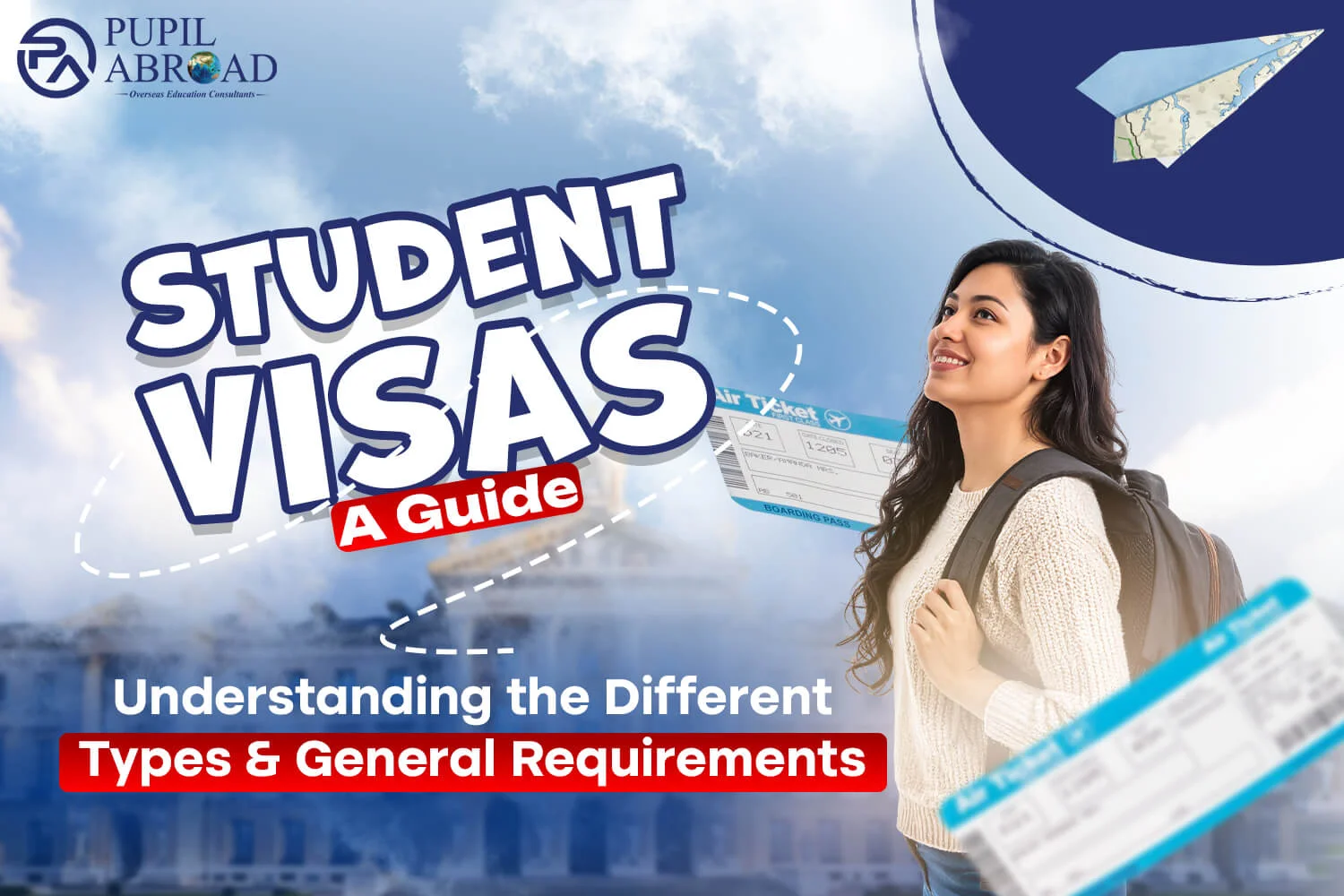
Student Visa Guide: Types, Requirements & Process for 2026
Introduction: Your Visa is the Key to the World
Securing a university acceptance letter is only half the battle for your study abroad journey. The true gateway is a student visa—a complex, non-negotiable document that grants you legal permission to live and study in another country. As application cycles for the 2026 academic year begin, understanding the types of student visas, their specific document requirements, and the step-by-step application process is your most critical administrative task. Before you even begin this process, it's crucial to have chosen the right destination. Our 5-step framework for choosing your study abroad country can help you make that fundamental decision first.
A single error can lead to delays, rejections, and heartbreak. This comprehensive guide demystifies the global student visa landscape, breaking down the major categories like the F-1 visa (USA), Tier 4 visa (UK), Canadian study permit, and the Schengen student visa. We’ll provide a clear, actionable checklist and timeline to ensure your 2026 application is successful, allowing you to focus on the excitement of your upcoming adventure, not the anxiety of paperwork.
Why Your Student Visa is Your Most Important Document
Think of your visa as your educational passport. It legally defines your purpose (study), your rights (to work part-time, access healthcare), your obligations (maintaining enrollment, following rules), and your duration of stay. Navigating this process successfully requires precision, patience, and proactive planning. The rules are constantly evolving, making up-to-date 2026-specific guidance essential.
Part 1: Understanding Major Student Visa Types by Destination
Each country has its own system. Here are the primary student visa categories you’ll encounter for 2026.
1. United States: The F-1 Student Visa
Purpose: For academic studies at accredited U.S. colleges, universities, or language programs.
Key Features:
Requires a Form I-20 issued by your Student and Exchange Visitor Program (SEVP)-certified school.
Allows for limited on-campus work and optional practical training (OPT) after graduation.
Applicants must prove "non-immigrant intent"—strong ties to their home country.
Process: After receiving your I-20, pay the SEVIS fee, complete the DS-160 form online, and schedule a visa interview at a U.S. Embassy or Consulate.
2. United Kingdom: The Student Route (formerly Tier 4)
Purpose: For study at a licensed UK higher education provider.
Key Features:
Requires a Confirmation of Acceptance for Studies (CAS) from your university.
You must prove financial ability to cover tuition and living costs (maintenance) for up to 9 months.
Allows part-time work during studies and access to the Graduate Route for post-study work.
Process: Apply online once you have your CAS. You’ll need to provide proof of finances, English proficiency, and may need to attend a biometrics appointment. For a deeper look at the UK system, see our guide on navigating the UK university application process.
3. Canada: The Study Permit
Purpose: Authorization to study at a Designated Learning Institution (DLI).
Key Features:
Not technically a visa, but a permit issued upon entry. You may also need a Visitor Visa or an Electronic Travel Authorization (eTA).
Often requires a Guaranteed Investment Certificate (GIC) as proof of funds.
Allows work on- and off-campus (up to 20 hours/week during sessions) and provides a clear path to a Post-Graduation Work Permit (PGWP).
Process: Apply online or via paper after receiving a Letter of Acceptance. The Student Direct Stream (SDS) is a faster option for applicants from certain countries.
4. Australia: The Student Visa (Subclass 500)
Purpose: For enrollment in a full-time course at an Australian institution.
Key Features:
A single visa subclass covers all fields of study.
Requires proof of Overseas Student Health Cover (OSHC) for your entire stay.
Allows you to work up to 48 hours per fortnight while studying.
Process: Apply online through ImmiAccount. You’ll need a Confirmation of Enrolment (CoE), financial evidence, and meet English language and health/character requirements.
5. The Schengen Area (Europe): The National Student Visa
Purpose: For study in the 27 European countries within the Schengen Zone (e.g., Germany, France, Italy, Netherlands).
Key Features:
You apply for a national long-stay visa (Type D) from the specific country where you will study.
This visa typically allows for free movement within the Schengen Area after arrival and registration.
After arrival, you must often apply for a resident permit for the duration of your studies.
Process: Apply at the embassy or consulate of your destination country. Requirements vary but commonly include proof of admission, health insurance, financial means, and accommodation. For those considering the affordable options in Europe, our article on studying in Germany, France, and Italy provides excellent context.
Part 2: The Universal Student Visa Checklist & Core Requirements
While each country is unique, most applications will require you to gather the following core documents. Start this process 6-12 months before your intended start date.
The 6 Pillars of a Strong Visa Application:
Valid Passport: Must be valid for at least 6 months beyond your intended period of stay.
Unconditional Letter of Acceptance: From a recognized, accredited institution in your host country.
Proof of Financial Support (The Most Critical):
Bank statements (your own or your sponsor's) showing sufficient funds for 1+ year of tuition and living costs.
Official scholarship or grant letters.
Notarized affidavits of support. Understanding your funding options is key; explore scholarships and financial aid for international students to strengthen your financial profile.
Health Insurance & Medical Checks: Many countries (like Australia and New Zealand) require a medical examination. All require proof of adequate health coverage for the visa's duration.
Proof of English Proficiency: IELTS, TOEFL, or PTE Academic scores, as required by your visa country (often the same as your university requirement).
Intent to Leave & Ties to Home Country: Evidence you plan to return home after studies. This can be property deeds, a letter from a future employer, or family ties.
Pro Tip: Before finalizing your country choice, ensure you can meet its specific financial proof requirements. Our framework for choosing the right study abroad country can help you evaluate this critical factor.
Part 3: The 2026 Application Process Timeline & Pro Tips
A rushed application is a risky application. Follow this timeline for a smooth process.
12-9 Months Before: Research student visa requirements for your shortlisted countries. Factor these into your final university decision.
6 Months Before: Upon receiving your acceptance, immediately begin gathering financial documents and scheduling any required medical exams.
4-5 Months Before: Complete the online visa application form with extreme care. Pay all fees (SEVIS, visa application, etc.). Book your visa interview or biometrics appointment as early as possible, as slots fill up.
2-3 Months Before: Attend your interview/biometrics. Be prepared to confidently explain your study plans, funding, and future goals. Bring every original document.
1 Month Before: Receive your passport with the visa. Book your flights (preferably refundable) and confirm accommodation. For students with specific support needs, ensuring your destination has the right infrastructure is vital; read about universities with strong mental health and learning support.
Top 5 Visa Application Mistakes to Avoid in 2026:
Insufficient Funds Proof: The number one reason for denial. Ensure funds are liquid, seasoned (in the account for a required period), and clearly documented.
Incomplete or Inconsistent Forms: Discrepancies between your application, I-20/COE, and financial documents raise red flags.
Poor Interview Preparation: For countries like the USA, the interview is decisive. Practice clear, concise answers about your university, program, and post-study plans.
Last-Minute Application: Processing delays are common. Apply as soon as you are eligible.
Using Unregistered Consultants: Always verify information on official government immigration websites. Fraudulent advice can lead to bans.
Conclusion: From Confusion to Confidence
The student visa process is a rigorous test of your organizational skills and determination. By breaking it down—understanding the type of student visa you need, meticulously preparing each document requirement, and following a disciplined application process timeline—you transform a daunting hurdle into a manageable series of steps.
For 2026, start earlier than you think you need to. Create a dedicated folder (digital and physical) for all your documents. When in doubt, contact the official immigration authority of your host country, not unofficial forums. Your diligence here is the final, crucial step in unlocking a world-class education and an unforgettable life experience. Remember, your visa is part of a larger journey—consider how it fits into long-term goals like gaining work experience through study abroad with co-op programs.
Your visa is the key. Turn it with confidence.
Need Personalized Visa Guidance? Consult Our Experts at PupilAbroad.com <<
Read More:
The Post-Study Work Visa Handbook: Country-by-Country Guide for 2026: Plan your career after graduation with our breakdown of PGWP, Graduate Route, and other work rights.
"Proof of Funds" Decoded: How to Show Financial Support for Your Student Visa: A detailed look at GICs, bank statements, affidavits, and sponsorship letters.
Health Insurance for International Students: A Complete Comparison Guide: Understand mandatory health coverage requirements for the USA, UK, Australia, Canada, and Europe.
FAQs: Student Visa Guide 2026
What are the different types of student visas available?
Student visa types vary by country. The most common include the F-1 visa for the United States, the Tier 4 (Student Route) visa for the United Kingdom, the Canadian study permit, the Australian Student Visa (Subclass 500), and various Schengen student visas for European countries. Each has specific requirements tailored to the country's immigration system.
What are the basic requirements for a student visa application?
All student visa applications require certain key documents: a valid passport, an official acceptance letter from an accredited institution, proof of financial support showing sufficient funds for tuition and living expenses, health insurance coverage, and in most cases, proof of language proficiency (like IELTS or TOEFL scores).
How do I apply for a student visa?
The application process typically follows these steps: first, receive your official acceptance letter from the university. Then, complete the online visa application form for your destination country, pay the required fees, schedule and attend a visa interview or biometrics appointment, and submit all supporting documents. Processing times vary by country.
How much money do I need to show for a student visa?
The amount varies significantly by country and location. Generally, you must show evidence of funds covering first-year tuition fees plus living expenses (often calculated as $15,000-$25,000 per year depending on the country). For example, UK visa requirements currently mandate showing £1,334 per month for London studies.
What is the processing time for student visas?
Processing times vary widely: US F-1 visas typically take 3-5 weeks after interview, UK Student Route visas process in 3 weeks standard or 5 days priority, Canadian study permits take 7-13 weeks, and Australian visas process in 29-42 days. Always apply well in advance of your program start date.
Can I work while studying on a student visa?
Most countries allow limited part-time work: USA permits 20 hours/week on-campus, UK allows 20 hours/week during term time, Canada permits 20 hours/week, and Australia allows 48 hours/fortnight. Some countries like Germany permit 120 full days or 240 half days per year.
What happens if my student visa application is denied?
If denied, you will receive a refusal letter explaining the reasons. Common reasons include insufficient financial proof, incomplete documentation, or failure to prove genuine study intentions. You can usually reapply after addressing the specific issues mentioned in your refusal letter.